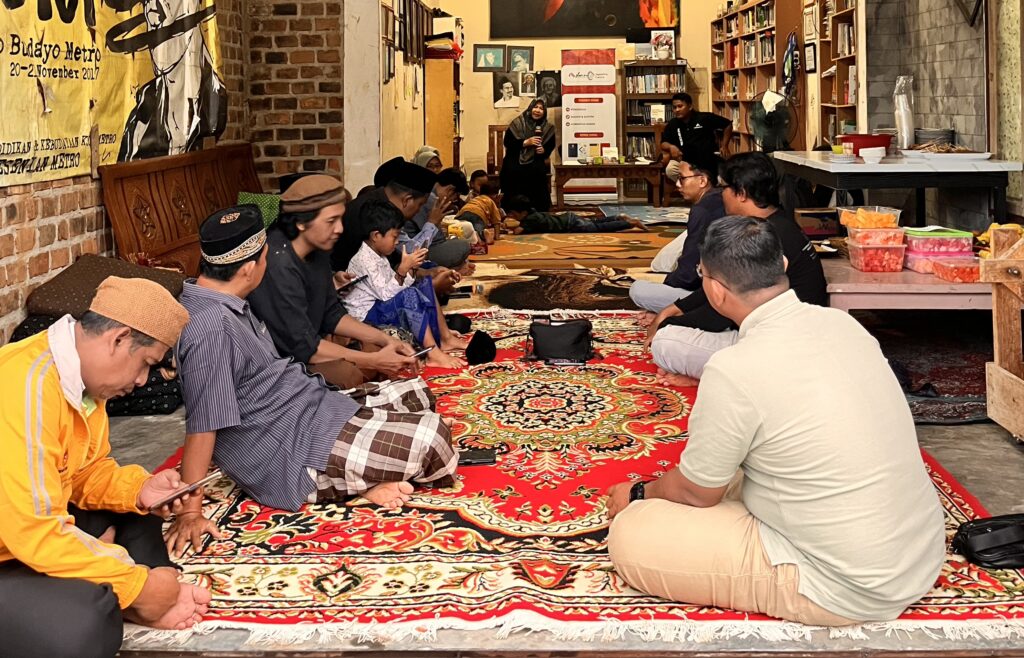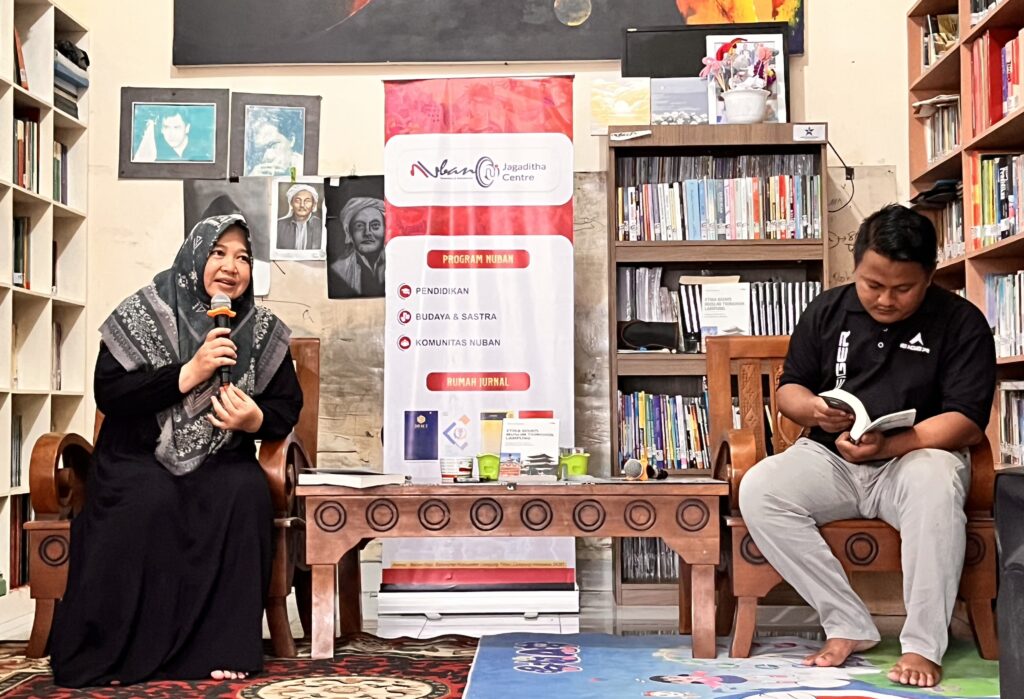
Nuban Institute organized a Book Discussion and Dialogue on the book “Business Ethics of Chinese Muslims in Lampung: Integration of Islamic Values and Cultural Acculturation” written by Diana Ambarwati, on Saturday, 28 February 2026, from 4:00 PM to 6:00 PM (WIB). The event featured the author herself as the main speaker and was moderated by Ananto Triwibowo, a lecturer at UIN Jusila.
The discussion was attended by around 25 participants, consisting of lecturers, students, cultural observers, and art activists. The atmosphere of the event was warm and interactive, as participants actively engaged in exchanging perspectives on ethical business practices and the role of culture and religion in shaping economic behavior.
The event began with an opening remark by Ahmad Muzakki, who emphasized the importance of intellectual forums such as book discussions. According to him, activities like this are not only meant to introduce new academic works but also to create spaces for dialogue, broaden perspectives, and strengthen a culture of critical discussion within society. He also highlighted that the theme of the book is highly relevant in Indonesia’s multicultural context, where religious and cultural values can complement each other in shaping ethical economic practices.
In her presentation, Diana Ambarwati explained that the book was inspired by concerns about contemporary business practices that are often perceived as detached from moral and spiritual values. Through a combination of Islamic ethical perspectives and Chinese cultural values, the book demonstrates that economic success does not have to come at the expense of moral integrity.
The book outlines key principles of Islamic business ethics, including honesty, justice, trustworthiness (amanah), and public welfare (maslahah), positioning them as the foundation of ethical business conduct. At the same time, the author highlights important values within Chinese business culture such as guanxi (networking and relationships), xinyong (trustworthiness), and ren (humaneness).
Based on empirical research on the Chinese Muslim community in Lampung, the book illustrates how these religious and cultural values interact in everyday business practices. Concepts such as “doing business with God,” maintaining halal principles, building employee loyalty, and practicing charity and philanthropy are shown to be integral to their business ethos.
During the discussion, Ananto Triwibowo noted that the book offers an important perspective on how cultural acculturation can contribute to the development of ethical business models in multicultural societies like Indonesia.
The two-hour discussion reflected the participants’ strong enthusiasm, with many questions and reflections emerging throughout the session. Through this event, Nuban Institute hopes to continue fostering intellectual dialogue while enriching discussions on the intersection of religion, culture, and economic practices in contemporary society.